It all started, I think, with road trips...
Long drives have a way of opening space for conversation. There is nowhere to rush to, no distractions beyond the road ahead, and time stretches out in a way it doesn’t at home. My girls and I spent many hours driving seven hours each way to visit their father in a neighbouring country, travelling slowly through the national park, watching the bush slide by. Inevitably, we would end up talking.
Sometimes the questions were light and playful. Sometimes they were far more thoughtful. On those drives, I realised that good questions unlock remarkable conversations. They reveal how someone thinks, what they value, what they fear, what they hope for. So I began collecting them. At first mentally, then scribbled down somewhere. Over time, they gathered into something more intentional.
Some of the questions grew out of very ordinary moments.
I remember standing in a fast-food restaurant one day and noticing an entire packet of untouched fries sitting right at the top of the bin. Outside, I knew there were hungry homeless people. I rescued the fries and gave them to someone outside. On the drive home, the girls and I had quite a debate about whether that had been right or wrong. Was it unsanitary? Was it wasteful not to? What does privilege look like? Where does greed fit in? It wasn’t just about chips. It was about values.
Other questions came from everyday teenage dilemmas. If you accept one invitation and later receive a better one, what do you do? What is the right thing to do? Does commitment matter more than opportunity? Those conversations became gentle guiding points as they grew older. The more we talked, the more I realised these were not just passing chats to fill time. They were shaping how my girls thought. They were helping them practise moral reasoning in low-risk spaces. They were helping us learn about each other
Eventually, the questions became a small game.
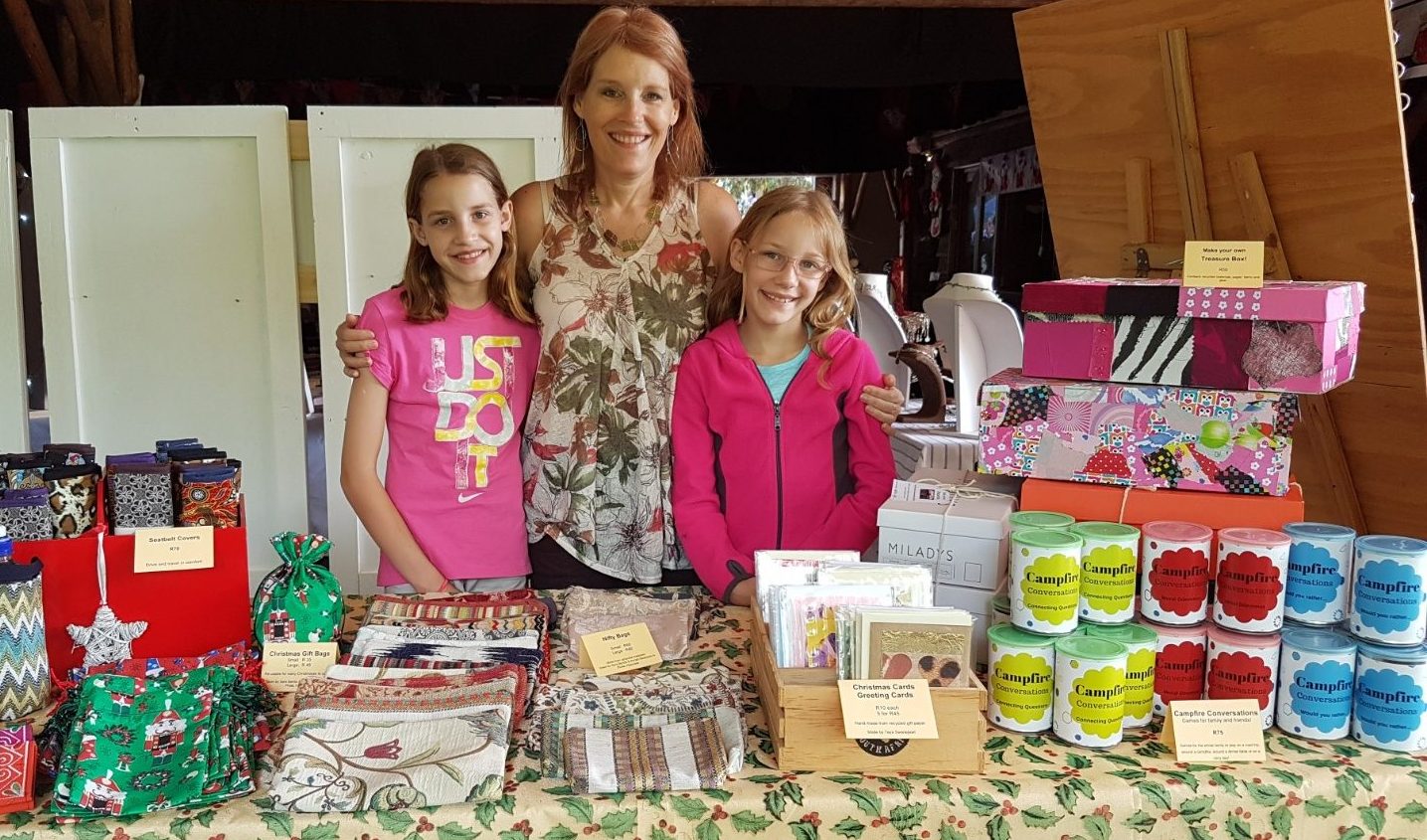
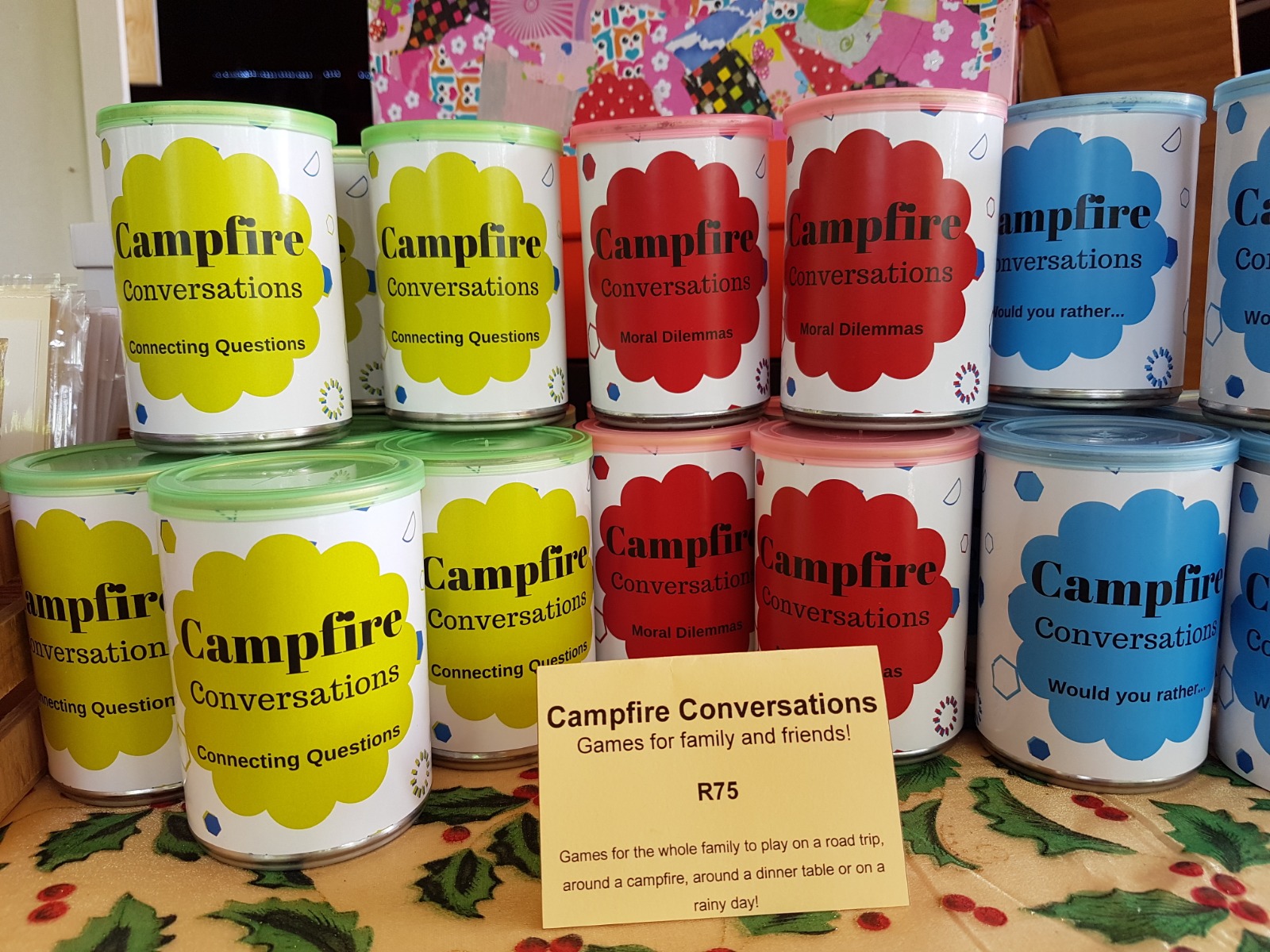
We printed little cards and cut them up ourselves. We upcycled food tins, cleaned them carefully, designed and printed labels, and sold them at a Christmas market under three themes: Connecting Questions, Moral Choices, and Would You Rather. The “Would You Rather” questions were often contributed by the girls themselves, and could become quite inventive.
We took those little cards everywhere — on road trips, to dinner tables, around campfires with friends. We would pull out the cards and see where they led us. The conversations were rarely predictable, and often surprisingly revealing, and frequently leading to lots of laughter.
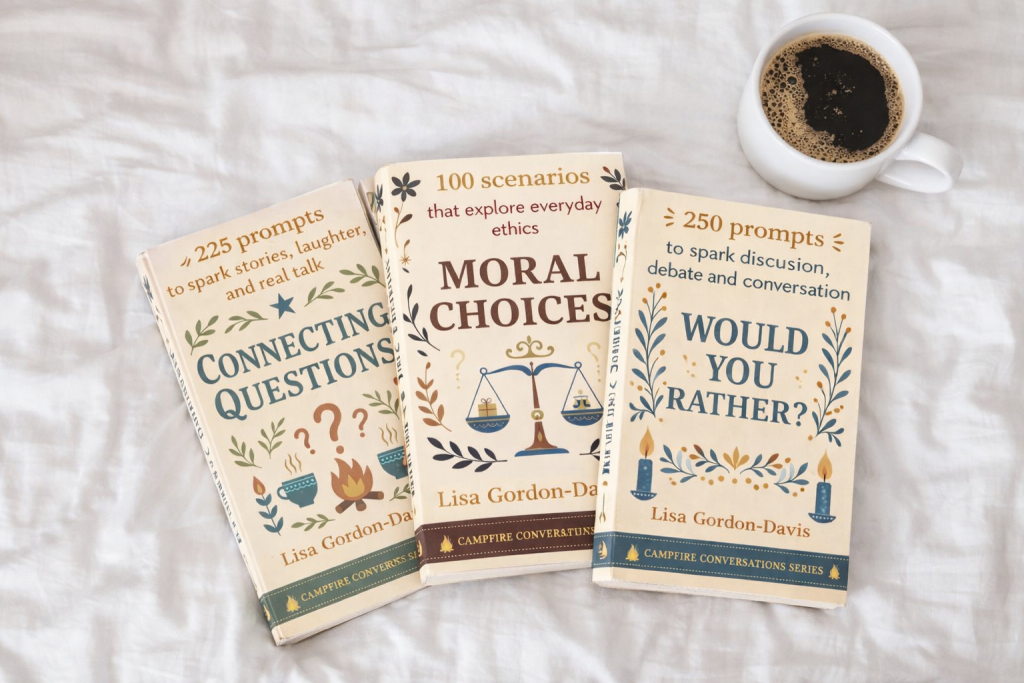
That small, homemade game eventually became the collection now published as Campfire Conversations. But the heart of it has always remained the same: real conversations, in real life, with my own family, growing and deepening as my daughters grew from children old enough to answer these questions into the young adults they are today.